Energy: kWh
Kilowatt hours describe the amount of energy stored. Check the usable capacity of the proposed model, as well as its nominal capacity.

A battery stores energy for later. The useful question is how that storage fits your electricity use, solar generation and backup priorities.
Kilowatt hours describe the amount of energy stored. Check the usable capacity of the proposed model, as well as its nominal capacity.
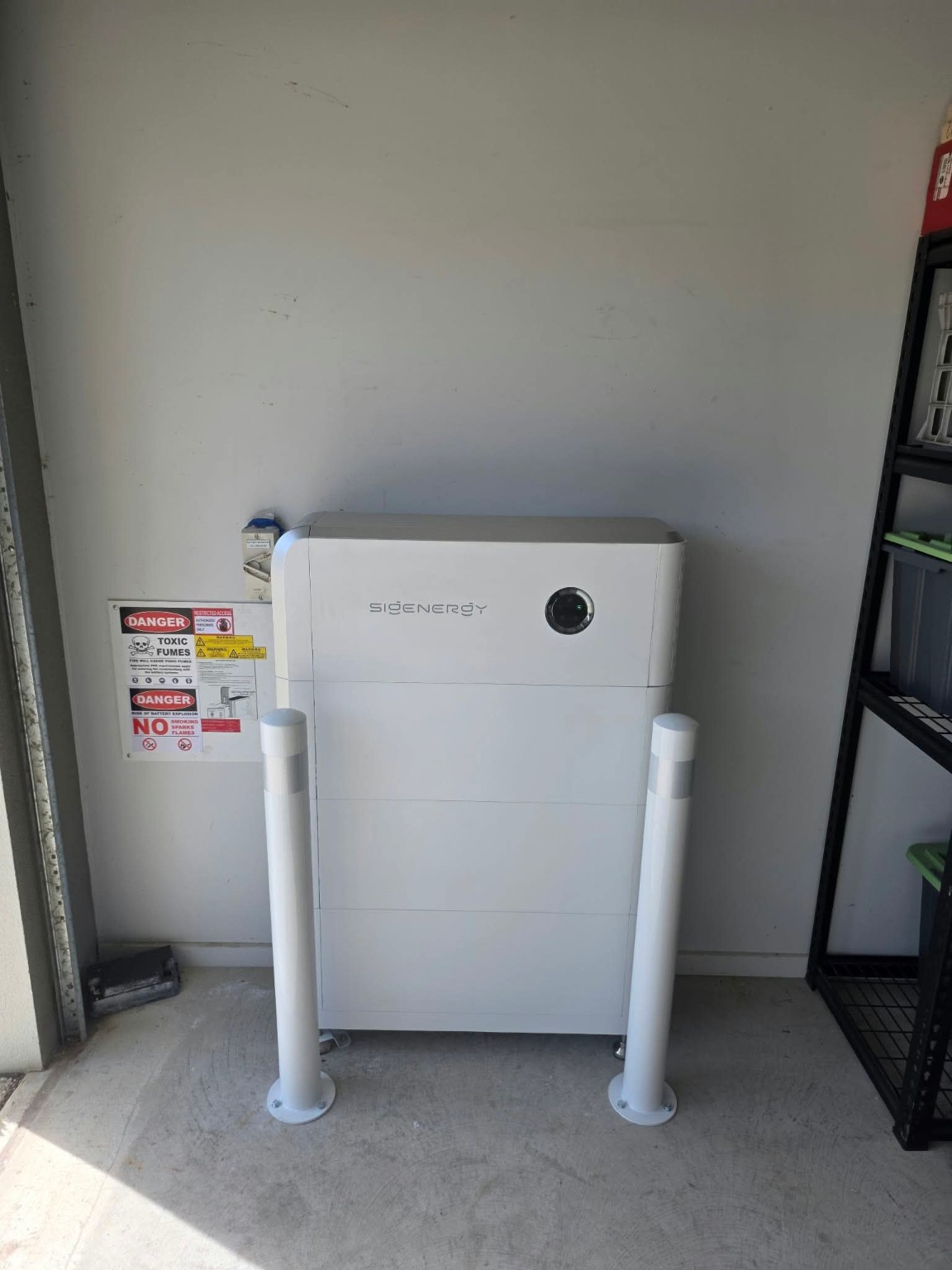
Kilowatts describe the rate at which energy can be supplied. The controller, battery modules and installation each affect which loads can run together.
The energy available at a particular time depends on the charge level and any reserve setting. A reserve kept for outages changes what is available for everyday use.
A battery’s kWh rating is not a promise that every appliance can run at once or that a blackout will be covered for a fixed number of hours.

SigenStor uses modular battery storage with an energy controller. The mySigen app provides monitoring of the system’s energy flows.
We size the proposed system around when you use electricity, the solar available to charge it and any planned changes to your household. Your proposal identifies the equipment and storage capacity included.
The modular design allows different configurations. Any later expansion still needs a check of the installed equipment, manufacturer requirements and site conditions.
Explore SigenStor at Sigenergy ANZ ↗For the home SigenStor backup arrangement we propose, suitable gateway equipment and electrical design are part of the scope. We confirm which circuits are included. Duration depends on available charge, running loads and conditions during the outage.
That may be possible. We check the inverter, metering, supply and proposed integration before confirming the approach. We also check what the existing solar can do during an outage if backup matters to you.
It depends on the energy you can charge into it and use later. We consider seasonal demand, future heating, heat pump hot water and EV charging loads, together with your electricity plan. More capacity alone does not establish the financial benefit.
Compare the written terms for the exact equipment quoted, including any capacity-retention conditions and exclusions. A warranty period is different from a prediction of battery life. We explain handover information and how to contact Vortex for support.
An assessment should identify the electricity plan, usage period, solar estimate and seasonal assumptions used. We review these alongside the proposed equipment and your future needs so you can understand the basis of the estimate.
Choose a site consultation or a remote review. You can text Simon at any time to start your inquiry. Our team reviews the information and follows up with you about the next step.
0468 005 291 · Local Vortex team
The Australian Government’s Cheaper Home Batteries Program supports eligible battery installations through the Small-scale Renewable Energy Scheme. Eligibility depends on the installation and current program rules; a discount should not be assumed before the proposal and eligibility checks are complete.
Ask Vortex to identify the incentives included in your proposal and any conditions that apply. Confirm the current rules before changing or expanding an existing battery system.